Software Development Models
Software Development Models
Software development models are structured approaches used to plan, develop, test, and deliver software systems. Different models are used depending on the project size, requirements, and complexity.
Below are some commonly used development models.
1. Sequential Waterfall Model
Definition
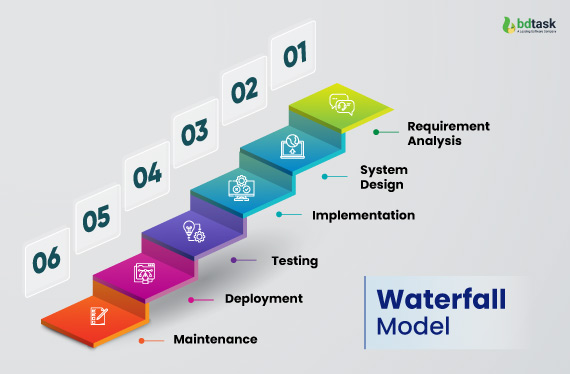
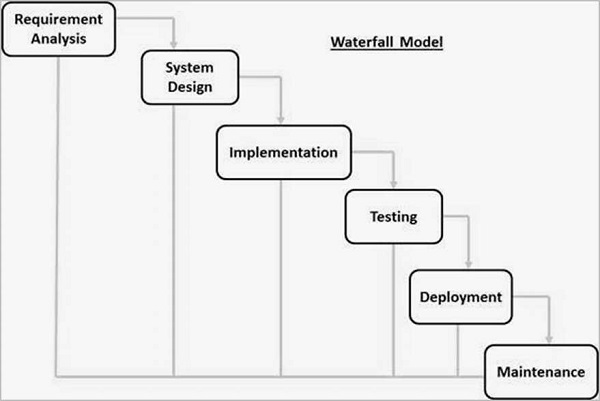
The Waterfall Model is a linear and sequential software development model where each phase must be completed before moving to the next phase.
Phases
Requirement Analysis
System Design
Implementation (Coding)
Testing
Deployment
Maintenance
Example
Developing a college management system where all requirements are clearly known from the beginning.
Advantages
Simple and easy to understand
Works well when requirements are fixed
Disadvantages
Difficult to make changes later
Not suitable for complex or changing projects
2. Incremental Model
Definition
The Incremental Model develops software in small parts called increments, where each increment adds new functionality.
Phases
Each increment follows:
Requirement
Design
Implementation
Testing
Example
Developing an e-commerce website:
First release → product listing
Second release → shopping cart
Third release → payment system
Advantages
Software is delivered in parts
Easier to test and manage
Disadvantages
Requires good planning
Integration between modules can be complex
3. Agile Model
Definition
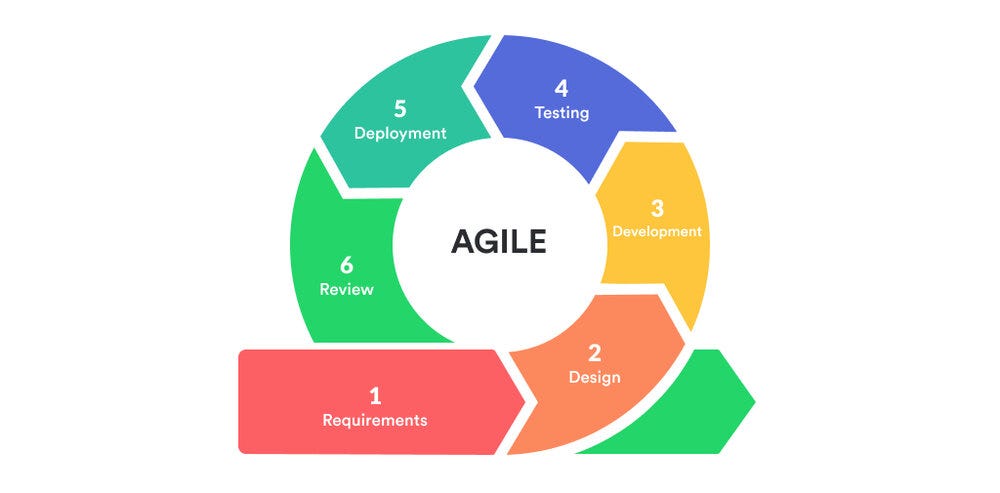
Agile is a flexible and iterative development model where software is developed in small cycles called sprints.
Phases
Planning
Development
Testing
Review
Release
Example
Developing a mobile application where features are updated frequently based on user feedback.
Advantages
Flexible to changes
Continuous customer feedback
Disadvantages
Difficult to estimate time and cost
Requires experienced team
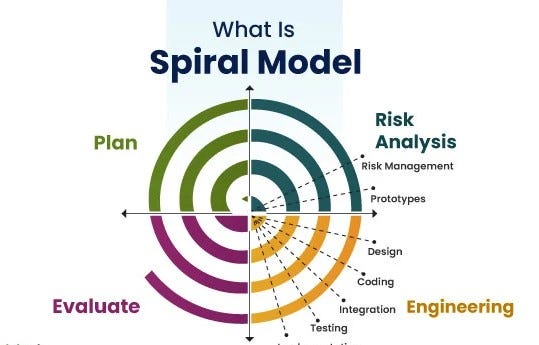
4. Spiral Model
Definition
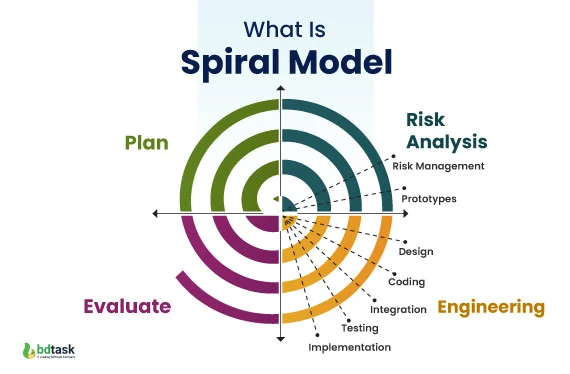
The Spiral Model is a risk-driven development model that combines iterative development with risk analysis.
Phases
Planning
Risk Analysis
Engineering (Development & Testing)
Evaluation
These phases repeat in a spiral cycle.
Example
Developing banking or defense software where risk analysis is very important.
Advantages
Good for large and high-risk projects
Continuous risk evaluation
Disadvantages
Expensive
Complex to manage
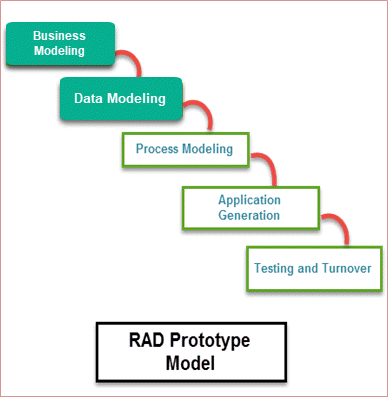
5. RAD (Rapid Application Development) Model
Definition
RAD is a development model focused on quick development using prototypes and user feedback.
Phases
Requirements Planning
User Design
Rapid Construction
Cutover (Testing & Deployment)
Example
Developing a small business web application quickly using reusable components.
Advantages
Fast development
High user involvement
Disadvantages
Not suitable for large projects
Requires skilled developers
Software development models help teams organize the process of building software efficiently. Different models such as Waterfall, Incremental, Agile, Spiral, and RAD are used based on project requirements, complexity, and time constraints. Choosing the correct development model improves software quality and project success.
Comments
Post a Comment